

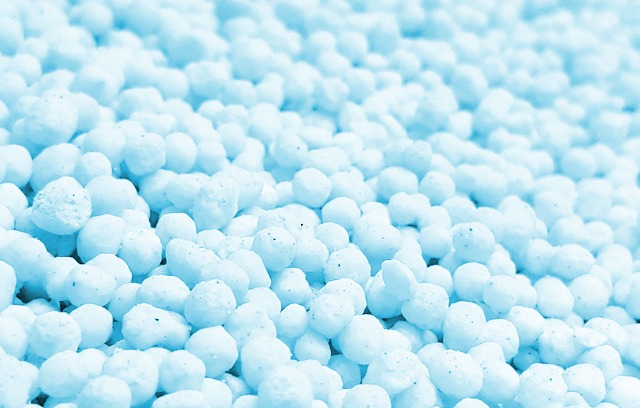
Source: Zerno On-Line (Russia)
China fertilizer export restrictions have expanded as the Chinese government ordered domestic exporters to suspend exports of nitrogen-potassium fertilizer blends. Moreover, Bloomberg reported this development. Chinese authorities have only confirmed existing export restrictions on urea in the form of quotas. Consequently, the price of this type of fertilizer has increased 1.4-fold on global markets.
China remains one of the largest fertilizer producers. Furthermore, the country has effectively halted shipments of most types of fertilizers, including complex fertilizers, according to sources who requested anonymity because the government did not authorize them to speak to the media.
China Fertilizer Export Restrictions: Middle East Impact and Price Surge
The conflict in the Middle East has led to a reduction in fertilizer supplies. Additionally, this has caused a sharp rise in prices worldwide. Spot prices for urea, the most widely used nitrogen fertilizer, have jumped nearly 40% to $700 per ton since the start of the US-Israeli attacks on Iran.
The cost of fertilizer raw materials has risen sharply since the US and Israeli attacks on Iran and the blocking of the Strait of Hormuz. Meanwhile, a third of global urea production and about a quarter of global ammonia trade, both essential for fertilizer production, come from the Persian Gulf. Fertilizers account for up to 25% of the cost of agricultural production.
Supply Disruptions and Food Security Risks
According to Kpler, as cited by the Financial Times, more than 1.1 million tons of fertilizer, including 570,000 tons of urea, remain stranded in the Persian Gulf countries. Furthermore, this includes product that producers either manufactured or were loading.
Nitrogen fertilizers, on which approximately half of global food production depends, are produced from ammonia using natural gas. Consequently, the production and supply of which has been disrupted in the Middle East, one of the world’s largest producing regions. At the same time, gas prices have risen by tens of percent. The crisis is unfolding at the start of the planting season in the Northern Hemisphere. Therefore, company representatives have warned of reduced yields for staple crops such as rice.
“The situation will be much worse than 2022 if things don’t change,” said Veronica Nye, senior economist at the US-based Fertilizer Institute. Furthermore, according to her, the situation is rapidly deteriorating as the conflict continues.