

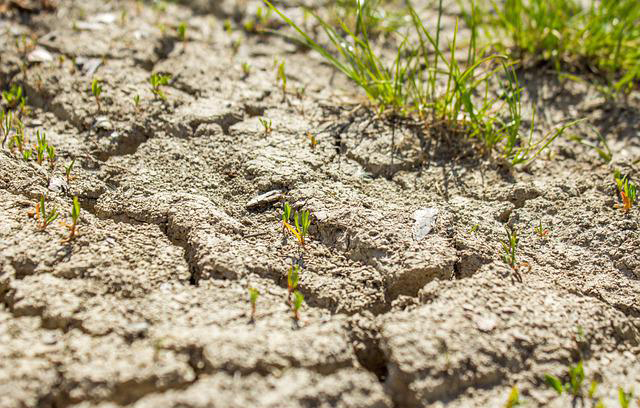
Egypt has achieved a remarkable agricultural milestone this spring, and the story of Egypt salt-tolerant wheat is now capturing global attention. The New Egyptian Countryside Development Company announced a major scientific and practical breakthrough in growing wheat on saline soils in the Al-Moghra region. Furthermore, this achievement is part of a 1.5 million feddan national development project, which aims to expand agricultural land in challenging natural conditions. As a result, the country moves one step closer to unlocking vast areas of previously unusable land for food production.
Trials Conducted in Extreme Salinity Conditions
The trials were conducted jointly with the Desert Research Center of the Egyptian Ministry of Agriculture. Moreover, researchers selected three specially developed varieties of salt-tolerant wheat for the experiment. Specifically, these varieties were planted in water with a salinity level of approximately 8,000 ppm — an extremely high level for conventional farming. Consequently, the conditions of the trial closely replicated the real-world challenges that Egypt’s saline soils present to traditional agriculture.
The results demonstrated high seed germination and strong plant tolerance to salinity. In addition, the trials recorded promising yields, and the harvested grain met quality standards. Therefore, the experiment confirmed the economic feasibility of the technology at scale. These outcomes together represent a significant step forward for Egypt’s agricultural research community.
Egypt Salt-Tolerant Wheat: Scaling Up and Food Security Implications
The company noted that further scaling up of the technology and improving agricultural practices could significantly increase yields. Thus, this opens the possibility of bringing previously unusable saline lands back into agricultural production. For a country like Egypt — one of the world’s largest wheat importers — this development carries enormous strategic importance.
The project’s leadership also emphasized that innovation plays a key role in strengthening the country’s food security. Furthermore, expanding the cultivation of strategic crops, including wheat, should reduce Egypt’s dependence on imports. Additionally, it supports the sustainable development of the agricultural sector over the long term. In short, Egypt salt-tolerant wheat research is not only a scientific achievement but also a practical answer to a pressing national challenge.
For traders and buyers interested in sourcing wheat or supporting agricultural development, GrainProTrade offers a wide range of products. You can explore current wheat offers and also browse available fertilizers to support productive farming on marginal lands.
Source: Ukragroconsult (Ukraine)
