

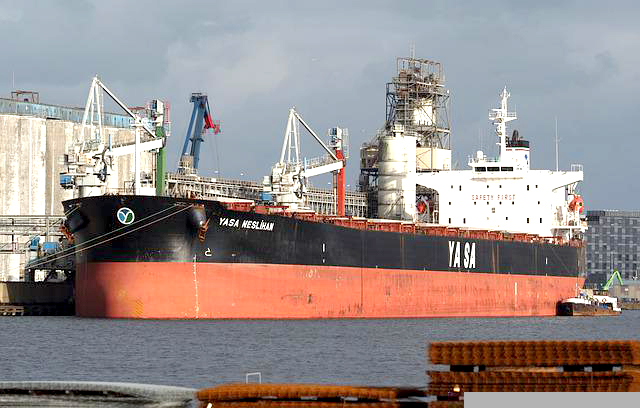
The Russian wheat export surge to Turkey has become one of the most striking developments in global grain trade in early 2026. Soft wheat exports to Turkey through ports in the Krasnodar Krai reached almost 1 million tons in the first quarter of 2026. Liliya Kugusheva, director of the Novorossiysk branch of the Federal Center for Assessment of Safety and Quality of Agricultural Products (FSBI “TSOK APK”), reported this to Interfax. These figures clearly signal a major shift in Russia’s wheat trade geography.
Russian Wheat Export Surge to Turkey: A Tenfold Jump
Soft wheat shipments to Turkey increased dramatically in just one year. “Soft wheat shipments to Turkey increased from 98,700 tons in the first quarter of 2025 to almost 1 million tons in January-March 2026,” Kugusheva said. This represents a tenfold increase. Therefore, Turkey has rapidly become one of Russia’s most important grain destinations.
Egypt Remains the Absolute Leader in Russian Grain Imports
Nevertheless, Egypt holds the top position among all buyers of Russian grain. The director emphasized that Egypt is the absolute leader in purchasing Russian grain. “According to the Novorossiysk branch of the ‘TSOK APK,’ the volume of soft wheat tested for export through ports in the Krasnodar Krai to Egypt increased to 2.8 million tons in the first quarter of 2026, up from 2.1 million tons a year earlier,” she added. Thus, shipments to Egypt increased by a third.
According to her, the top five countries importing Russian grain are:
- Turkey
- Egypt
- Iran
- Bangladesh
- China
All of these countries have different quality requirements. However, GMOs are not permitted in any quantity in any of them.
Quality and Phytosanitary Requirements: Two Very Different Approaches
Kugusheva noted that Egypt and Turkey — the two largest buyers of Russian grain — have radically different approaches to quality requirements. Furthermore, each country enforces its own strict set of standards.
Turkey monitors residues of 470 pesticides. In addition, it requires testing for four types of fungi, four types of viruses, and four types of nematodes.
Egypt, while requiring fewer pesticides, imposes unprecedented phytosanitary requirements. Specifically, 35 types of fungi, 41 types of insect pests, and 27 types of weeds are prohibited.
“When compiling export consignments, exporters must strictly adhere to the requirements of importing countries. This is a prerequisite for successfully passing inspection at ports of destination and the only effective measure to avoid the risk of cargo returns,” Kugusheva explained.
Krasnodar Krai Ports Drive Overall Export Growth
Beyond Turkey and Egypt, overall grain exports through Krasnodar Krai ports grew significantly. As reported, grain and processed product exports through Krasnodar Krai ports increased 1.6-fold in the first quarter compared to the same period last year, exceeding 7.6 million tons.
Krasnodar Krai is home to one of Russia’s largest ports, Novorossiysk, as well as the ports of Tuapse, Yeysk, Temryuk, Kavkaz, and Taman. Notably, according to the Krasnodar Krai Ministry of Transport, these ports handle up to 30% of all foreign trade and transit cargo handled by Russian seaports. Consequently, the region plays a central strategic role in Russia’s grain export infrastructure.
Source: Zerno On-Line (Russia)